Everyday dining
Placemats for Everyday Dining: Materials, Shapes, and Care
A placemat is a small piece of the table with a practical job: it marks a place, catches spills, and helps shield the surface beneath. Choosing well means balancing material, shape, size, and upkeep—not simply picking a color that looks good in the cupboard.
Everyday meals are rarely staged. A cup gets nudged; a spoon leaves a streak; a plate arrives warm from the kitchen. Placemats take the first encounter with those ordinary mishaps. They can also bring order to a table, giving each diner a defined space and adding a layer of color or texture without requiring a full tablecloth.
That combination of protection and presentation makes placemats worth choosing with care. A woven mat may soften a room and feel welcoming, but its texture can hold crumbs. A smooth surface wipes clean quickly, though it may feel less warm or slide more easily. Shape changes how a setting fits, while dimensions determine whether there is enough room for a plate, glass, and cutlery. The best choice is the one that suits the way a household actually eats—and cleans up afterward.
What placemats do—and what they do not
A placemat creates a useful boundary between dishes and the dining surface. Depending on its construction, it may help protect against scratches, crumbs, light spills, or everyday scuffs. It can also make a table setting feel intentional, even when the meal is an ordinary weekday dinner. A few coordinated mats can introduce pattern and color without changing the rest of the room.
Protection has limits. A placemat is not automatically waterproof, heatproof, or stainproof. Liquid can seep through fabric or collect at an edge; a hot pan may damage both the mat and the table beneath it. Check the product’s care and use instructions rather than assuming a particular material can take any kind of heat or spill. For hot cookware, use a trivet or other item specifically designed for that purpose.
The table itself matters, too. A delicate finish may need more protection than a resilient surface, and some finishes can be affected by moisture trapped underneath a mat. If a placemat becomes wet, lift it and dry the table rather than leaving dampness in place. This simple habit can prevent a practical accessory from creating a new problem.
Choosing placemat materials
Material shapes the experience of using a placemat: how it feels, how it behaves under dishes, and how much effort cleanup requires. Broadly, options fall into two camps. Woven and textured surfaces bring softness and visual depth. Smooth, nonporous surfaces tend to be easier to wipe. Within each group, quality and construction can make a significant difference.
Cotton and linen
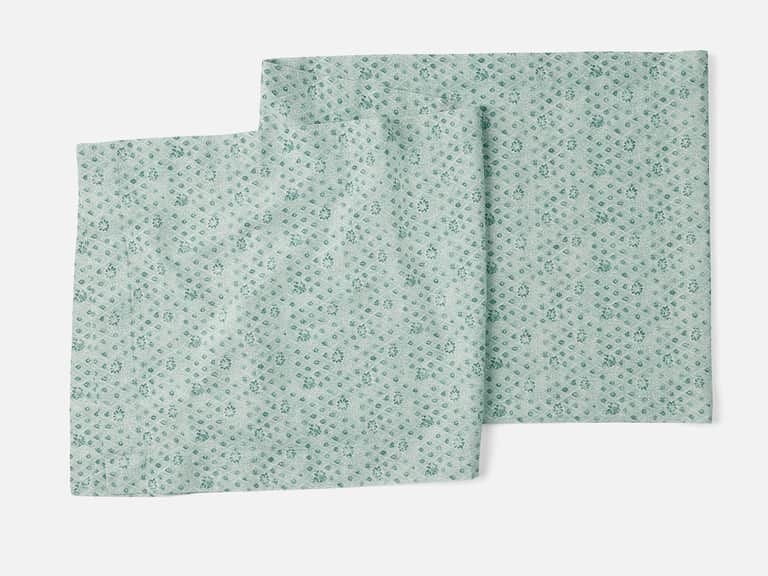
Cotton and linen placemats suit households that like a relaxed, textile-rich table. Both fibers can feel comfortable and look at home in casual settings, while differences in weave, weight, and finishing affect their appearance and performance. A tightly woven mat may hold its shape more readily than a loose one; a pronounced texture can add character but may make crumbs harder to brush away.
Fabric placemats can often be laundered, but the correct method depends on the particular product. Read the care label before washing, and consider color, construction, and any decorative details. Some mats may be machine washable; others may require gentler handling or spot cleaning. Even washable textiles benefit from prompt attention to spills, since food and drink can become more difficult to remove once they dry.
Natural fibers may wrinkle after washing. That is not necessarily a flaw: a softly rumpled surface can suit an informal table. If a crisper look matters, follow the manufacturer’s ironing guidance and avoid applying heat to finishes or trims unless the instructions allow it. The useful question is not whether a mat stays perfectly pristine, but whether its appearance and care demands match the household’s routine.
Woven plant fibers
Woven materials such as bamboo, seagrass, and other plant fibers can bring a natural, tactile quality to a setting. Their texture often makes a table feel less formal, and a firm weave can provide a stable base for plates. At the same time, these materials may be less suited to soaking or machine washing. Water, oils, and food can lodge between the strands, so cleaning is often a matter of brushing or wiping rather than laundering.
Inspect the weave and edges. A tightly finished mat is generally easier to keep orderly than one with loose fibers or an unfinished perimeter. Keep woven plant-fiber mats dry between uses and follow the maker’s guidance if a spill occurs. Because construction varies, a label’s instructions are more dependable than assumptions based on the material name alone.
Cork
Cork offers a light, relatively firm surface with a warm, understated appearance. It can work well for everyday meals when the mat is sealed and designed for dining use. Unsealed or poorly protected cork may absorb liquid or become marked, so check the finish and cleaning instructions before choosing it. Wipe spills promptly, use a damp cloth only when permitted, and let the mat dry fully.
Silicone and other smooth surfaces
Silicone and similar wipe-clean materials are appealing where quick cleanup is a priority. Their smooth surfaces can be useful for families, busy kitchens, or meals involving sauces and drinks. Some are flexible enough to roll or store flat; others are designed with a little structure. Look for stable construction and clear care guidance, including whether the mat can be washed in a dishwasher or should be cleaned by hand.
Smoothness is not a guarantee of perfect performance. A mat that slides, curls at the edge, or clings to the table may be frustrating in daily use. Before buying a set, consider how it sits beneath a plate and whether its surface is comfortable to use. Ease of wiping matters, but so do grip, flexibility, and the amount of storage space available.
Vinyl and coated materials
Vinyl and coated placemats are often selected for straightforward wipe-down care. They come in a range of colors and patterns, and their smooth finish can suit a high-use table. The coating and backing determine how well a mat resists stains, heat, or moisture, however. Avoid treating a coated surface as a trivet unless the maker explicitly identifies it as heat-safe. Strong cleaning products or abrasive scrubbers may also damage a printed or finished layer.
Comparing materials at a glance
- Cotton or linen: Soft and adaptable in appearance; check whether laundering is permitted and expect some fabrics to wrinkle.
- Woven plant fibers: Textural and casual; generally need careful, surface-level cleaning rather than soaking.
- Cork: Light and understated; performance depends on the finish, and standing moisture should be avoided.
- Silicone: Often convenient to wipe; check grip, storage needs, and the manufacturer’s washing instructions.
- Vinyl or coated textiles: Practical for quick cleanup; protect the surface from unsuitable heat and harsh cleaners.
Shape: a small decision with table-wide effects
Shape influences both style and spacing. The familiar rectangle is versatile: it sits naturally beneath a plate and cutlery, works on many rectangular tables, and can be lined up neatly for a row of diners. Its corners, though, may extend into neighboring place settings when the table is narrow.
Oval placemats soften the geometry of a setting. They can suit round plates and tables, and their curved edges may feel less crowded on a compact surface. Their footprint is not always as easy to align as a rectangle, so measure the available width and think about how many settings need to fit.
Round mats make a clear visual frame beneath a plate. They are a natural partner for circular tabletops, though they can use space differently from rectangular styles. A broad round mat may overlap with the neighboring diner’s area; a smaller one may leave cutlery without enough room. Shape should be judged by the complete place setting, not by the mat alone.
Square placemats create a graphic, balanced arrangement. They can look especially orderly on square tables, but the corners may crowd when several diners sit close together. More unusual shapes can add personality, yet they may be harder to store or replace. If flexibility matters, a conventional shape is often the more reliable choice.
How to choose the right dimensions
A placemat should be large enough to hold the dishes and utensils used at a typical meal, but not so large that it overwhelms the table. Start by measuring the table and considering the number of diners. Then lay out a plate, glass, and cutlery—or measure the arrangement—to see how much space a setting actually occupies.
Allow room between neighboring mats. They should not collide when people sit down or reach for a glass. On a narrow table, a smaller mat or a streamlined shape can preserve elbow room. On a broad table, a larger placemat may feel more proportionate and provide a wider protective area. The right dimensions depend on the table, chairs, and serving habits, not on a single universal measurement.
Think about how the table is used between meals. If it doubles as a work surface, a large set of placemats may need to be cleared and stored regularly. If the table remains set, the mats become a constant part of the room’s visual arrangement. Either way, measure the storage location too: a mat that fits the table but not the drawer or shelf may quickly become inconvenient.
Color, pattern, and the everyday table
Color can make placemats feel integrated or deliberately contrasting. Neutrals tend to blend with a range of dishes and table finishes; stronger colors create a focal point. A patterned mat can disguise small signs of use more effectively than a plain, pale surface, although visible texture may complicate cleanup. The goal is not to predict every stain, but to choose a design that still feels welcome after ordinary use.
Consider what is already on the table: the grain or color of the surface, the shape of the dishes, and the tones of nearby furnishings. Matching every element can feel overly controlled; repeating one color or material is often enough to make a setting feel considered. If the room changes with the seasons, reversible mats or a small rotation can offer variety without filling a cupboard with seldom-used pieces.
Care that helps placemats last
Care begins before the first spill. Read the label or product instructions, particularly when a mat combines materials or has a coating, binding, or decorative edge. Keep those directions accessible if the set will be used frequently. A quick glance can prevent avoidable damage from an unsuitable wash cycle, temperature, or cleaning product.
- Clear crumbs promptly. Shake or brush them away before they are pressed into a woven surface or carried into storage.
- Blot rather than rub. For a fresh spill, use a clean cloth to absorb what you can. Rubbing may spread the stain or work it deeper into the fibers.
- Use a method suited to the material. A damp cloth may suit a sealed surface, while a washable textile may need laundering according to its label. Avoid soaking a mat unless the instructions permit it.
- Dry fully. Let placemats dry before stacking or putting them away. Trapped moisture can lead to odors, warping, or damage to the table beneath.
- Store flat or rolled as directed. Folding a stiff mat can leave a permanent crease; rolling a delicate textile tightly can distort its shape.
For washable fabric placemats, separate colors when appropriate and follow the recommended cycle and drying method. Avoid relying on bleach, stain removers, or high heat unless the care instructions say they are suitable. A spot test on an inconspicuous area can be prudent when a cleaning product is approved but its effect on color or finish is uncertain.
For wipe-clean mats, use a soft cloth and a mild cleaner if permitted. Abrasive pads can dull or scratch a surface; strong solvents may affect coatings or printed designs. If a mat has a textured pattern, clean its grooves carefully and check both sides before putting it away. Regular, gentle cleaning is usually more useful than an occasional aggressive scrub.
Buying placemats for a real household
Before choosing a set, consider the people and routines it needs to serve. A household with young children may put a premium on fast cleanup and a mat that stays in place. Someone who enjoys laundering and changing textiles may prefer cotton or linen. A small apartment may need mats that stack neatly or roll into a compact space. No material is best for every table; convenience is personal and practical.
Check the number of mats included and whether replacements are likely to be available. A set of four may be enough for a smaller household, while a larger table may need more. If the mats will be used every day, a spare can be useful while another is being washed. Look closely at hems, edges, backing, and surface finish: those details often determine how a mat behaves after months of handling.
Also consider the cost of maintenance, not only the initial purchase. A low-care mat can save time, while a washable textile may offer a familiar feel and the ability to refresh its appearance. Longevity depends on construction, use, and care, so a durable choice is not necessarily the stiffest or most expensive. It is the one that continues to work within the household’s habits.
A quick decision checklist
- Measure the table and the space available for each place setting.
- Choose a shape that leaves room for neighboring diners and serving dishes.
- Decide whether you prefer a washable textile or a surface that can be wiped clean.
- Read the care instructions and check any limits on water, heat, or cleaning products.
- Consider grip, storage, and whether the mat lies flat at the edges.
- Select colors and patterns that suit the table but can tolerate everyday use.
The useful beauty of a well-chosen placemat
Placemats rarely dominate a room, and that is part of their appeal. They make a table more manageable without demanding a complete redesign. They can protect a finish, organize a setting, and add just enough texture to make a simple meal feel cared for. Their value is measured less in ceremony than in repetition: one ordinary lunch, one quick cleanup, then another meal tomorrow.
The decision comes down to a few grounded questions. Does the material suit the kinds of messes that happen at home? Does the shape fit the table and the dishes? Can the placemat be cleaned and stored without becoming a chore? Answer those questions honestly, and the right option becomes easier to see. A practical placemat does not need to be precious. It needs to look at home, work hard, and make everyday dining a little simpler.